I share this as my opinion, informed by science, but it may not hold for everyone.
(Research from comprehensive brain imaging studies shows that human brain development continues far beyond the early 20s, with important neural refinement and integration extending into the late 20s and early 30s. One large‑scale investigation analyzing nearly 4,000 MRI scans found that the period often called “adolescence” — during which neural networks become increasingly efficient and interconnected — lasts up to around age 32, with major improvements in connectivity and communication across brain regions through the 20s before reaching a more stable adult phase at about 32. (The Independent) This prolonged development supports functions such as attention regulation, improved judgment, emotional control, and long‑term decision‑making, as connections between key decision‑making areas like the prefrontal cortex and memory‑related regions strengthen with age. (britbrief.co.uk)


Dear Woman in Your 20s,
Time to see things as they really are — kindly, but clearly.
We’ve all seen the statistics. They tell young women that the best age for marriage or starting a family is somewhere between 23 and 28. On paper, it looks perfect. You’ve completed school, you’ve got the entry-level job, and you live by yourself.
But as a coach, nurse, and mentor, I want to ask you a hard question: If you spent 23 years in a classroom and only 2 years in the “real world,” do you actually know the woman who is saying “I do” or is ready to bring up another little human being?
Mainstream research confuses age with readiness. But age is just a number on an identity card. Autonomy is the muscle you build when you are the only person responsible for your life.
If you graduate at 24 and marry at 26, you’ve only had a tiny window to experience yourself outside of a system. You went from your parents’ rules to a college schedule, to a husband’s or household head’s lifestyle.
You are often told two things at the same time:
- “You’re finally an adult now.”
- “Don’t wait too long to get married.”
But no one explains the contradiction.
Most women in their mid-20s, depending on various factors, are still:
- in school or just finishing
- financially dependent or barely stable
- learning how to live alone, decide alone, fail alone
- discovering who they are outside family, society, church, culture, and expectations
- Discovering emotional patterns and traumas
- Discovering where one stands in spirituality
- Discovering your weaknesses and strengths
Yet somehow, this same season is presented as the ideal time to make one of the largest, most permanent decisions of your life.
That doesn’t add up.
Before you bind your life to permanent decisions, you need to know how you handle:
- A Tuesday night alone: Can you truly enjoy your own company?
- A professional setback: Who are you when you aren’t “the smart girl” or the “overachiever” your teachers and parents have always praised?
- A spiritual rollercoaster: Is your faith yours, or just a reflection of the expectations of your family, church, or community?
- Relationship conflict: Can you navigate disagreements without emotional outbursts or depending on someone else to fix it for you?
- Money — can you manage your own finances, make responsible decisions, and handle unexpected challenges without leaning on someone else to bail you out?
Life is a learning curve, and your 20s are the perfect time to learn—and to set the basics. But even while you’re learning, there’s a bare minimum you need: the skills, discipline, self-awareness, and a strong sense of your own identity to stand on your own before committing to lifelong choices. These experiences aren’t obstacles—they’re shaping your trajectory, helping you understand what you can accommodate and what you cannot as you grow. They build your independence, sharpen your self-awareness, and give you the wisdom you’ll need for the permanent decisions ahead. https://finallyamfound.com/
Your 20s Are a Learning Decade — Not a Lock-In Decade.
Modern research and real life agree on this:
Adulthood today starts later than it used to.
Not because young women are weak — but because life is more complex.
Education takes longer.
Careers take longer to stabilize.
Identity takes longer to form.
Economic Pressures
Cultural Shifts in Priorities
Changing Legal and Social Milestones
For many women, true independence doesn’t begin until the late 20s or early 30s, because the 20s is preparation phase
So let’s be honest:
How can you be expected to “choose wisely forever” when you’ve barely lived independently for a few years? This is the self-discovery phase. And it becomes even more challenging if you end up with a selfish partner.
What You Are Actually Meant to Learn in Your 20s
This decade is not about rushing into permanence. It’s about formation.
Here’s what your 20s are for:
1. Learning who you are without supervision
Not who you were raised to be.
Not who you perform as. But who you are when:
- No one is watching
- No one is rescuing
- No one is directing
Marriage before this learning often means you fade away quietly, especially if your husband is also unprepared.
2. Learning how you handle pressure, money, failure, and conflict
Before marriage, you need to know:
- How do you react when stressed?
- How do you manage money when it’s tight?
- How do you recover from mistakes?
- What does peace look like?
- How do other people in other parts of the world behave? Explore
- When and how do you rest?
- What is wealth to you?
- What are your desires, dreams, and ambitions?
Marriage doesn’t teach these skills — it exposes whether you have them.
3. Learning boundaries
In your 20s, you learn:
- When to say no
- When to walk away
- When to speak up
- When not to over-function
Women who skip this learning phase often become:
- overly accommodating
- emotionally exhausted
- trapped in “good wife” roles without a strong self
Formation Before Covenant
Marriage is a beautiful, God-ordained covenant. But a covenant requires two whole people. If you rush the “Formation” phase of your 20s to get to the “Covenant” phase, you might find yourself at 35 wondering whose life you’re actually living.
Don’t fear even your 30s. Waiting until you have consolidated your identity isn’t “missing out”—it’s giving your future husband, your children, and yourself the gift of a woman who is fully found, not a girl still hiding behind expectations, insecurities, traumas, or unfinished growth.
Rushing this process can risk living a life that isn’t fully purposeful, harm or even break your partner, and affect the children you love, teaching them patterns of compromise or unmet potential. Taking the time to grow first ensures that when you finally step into marriage and motherhood, you do so from strength, clarity, and wholeness.
Just so you know
Marriage is not a shortcut to adulthood. It is an amplifier.
If you are still unsure of who you are, marriage will not clarify you — it will stretch you thin.
Many women don’t regret marrying the person.
They regret marrying before they knew themselves, or worse still, confuse the two.
That regret doesn’t always show up as divorce.
Sometimes it shows up as quiet grief and ailments.
Rethinking the Pressure to Marry “On Time”
Let’s look at it differently. If you:
- finish school around 24–25
- begin truly living independently at 26
- are still discovering yourself between 27 and 29
Then marrying at 30 or later isn’t “late”—it’s the right timing for the life you’re building. Waiting until you’ve grown, learned, and solidified who you are ensures that when you do commit, you bring your full self to the relationship, not a version still finding its footing.
Faith and Timing (Without Guilt)
The Bible doesn’t set a specific age for marriage, but it emphasizes wisdom, maturity, and readiness before entering life-long covenants. Ecclesiastes 3 reminds us there is a time for everything, and Proverbs 4:7 highlights the importance of seeking understanding before making major life decisions. 1 Corinthians 13:11 encourages us to leave behind childlike ways and grow into maturity, while Proverbs 31 depicts a woman of strength, wisdom, and responsibility—someone prepared to lead and care for her household. Marriage, as Genesis 2:24 shows, is a sacred covenant between two whole people, and rushing into it before fully forming yourself can create imbalance and challenges. Psalm 37:7–8 calls us to trust God’s timing, showing that waiting until you are spiritually, emotionally, and practically ready is not fear or rebellion, but faith and wisdom in action.
Mindshift Challenge
Take a hard look at your current path. If your relationship ended tomorrow, would you still have a life you recognize and love? If your answer is, “I’m not sure,” it’s a sign to stop the clock and start the work of finding yourself first. Invest in your growth, your independence, and your identity today—your future self and your future marriage will thank you.
By allowing yourself to form, you can choose a partner with whom you expand, because you attract who you are, but not always a partner who will force you to shrink by living in someone else’s preferences.
Don’t dare have a baby before you understand yourself or life. Remember, a child doesn’t just need love, and the child makes their own choices.
Prayer
Lord, help me to grow into the person You created me to be. Guide my heart, mind, and decisions, and teach me patience as I learn, mature, and discover my identity in Christ. Prepare me for the relationships and responsibilities ahead, and let my life reflect Your wisdom and love. May I enter marriage and motherhood with strength, clarity, and a heart fully Yours.
In Jesus Christ, I believe
Amen.
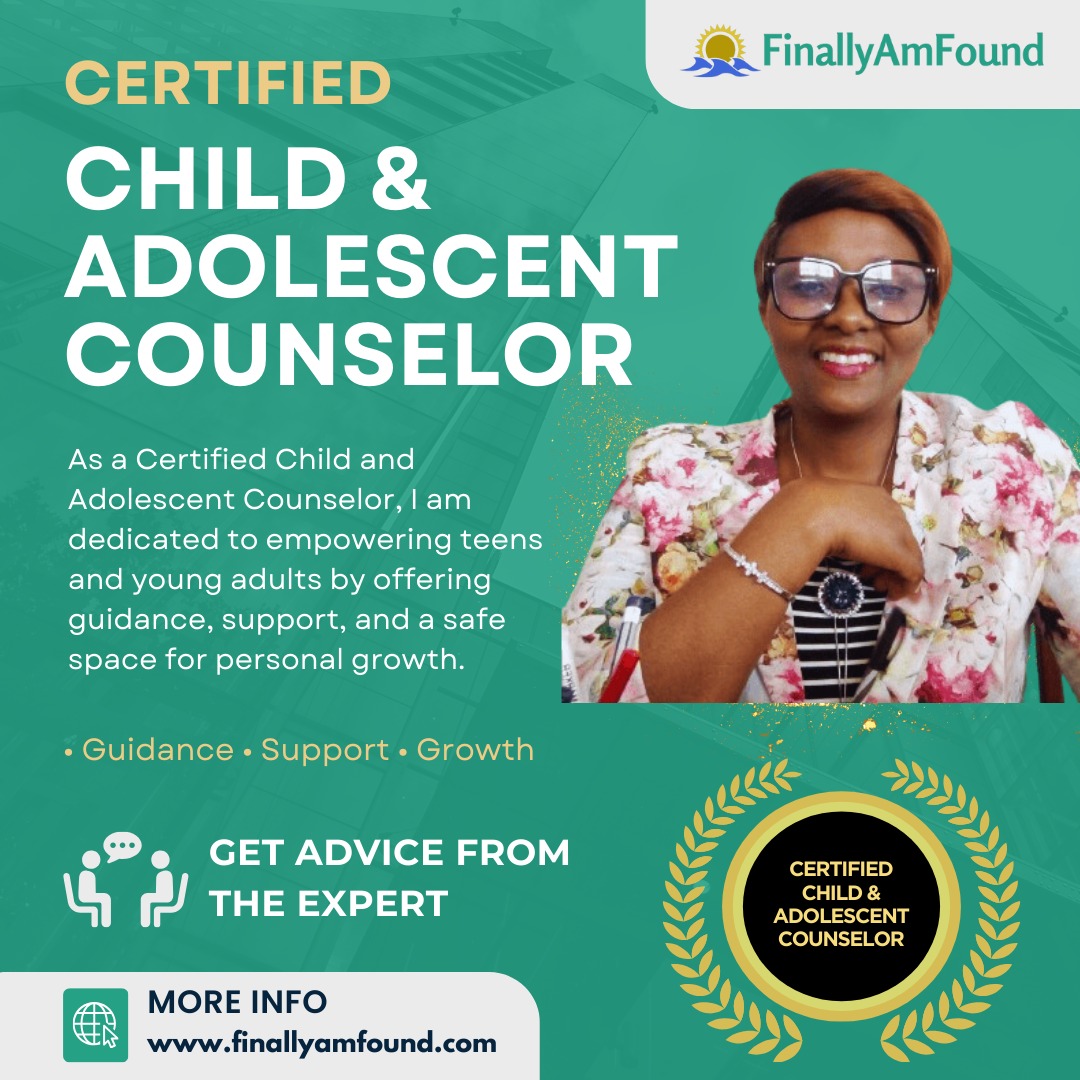
Hey, I’m Angeline, your RN, also a Counselor and founder of Finally Am Found. With a heart for mentorship, I’ve been guiding teens and young adults since 2017. As a Registered Nurse, I blend medical expertise with personal experiences to create a Christ-aligned space for self-discovery. Connect with Angeline on Facebook and let the journey to self-discovery begin!
 1
1